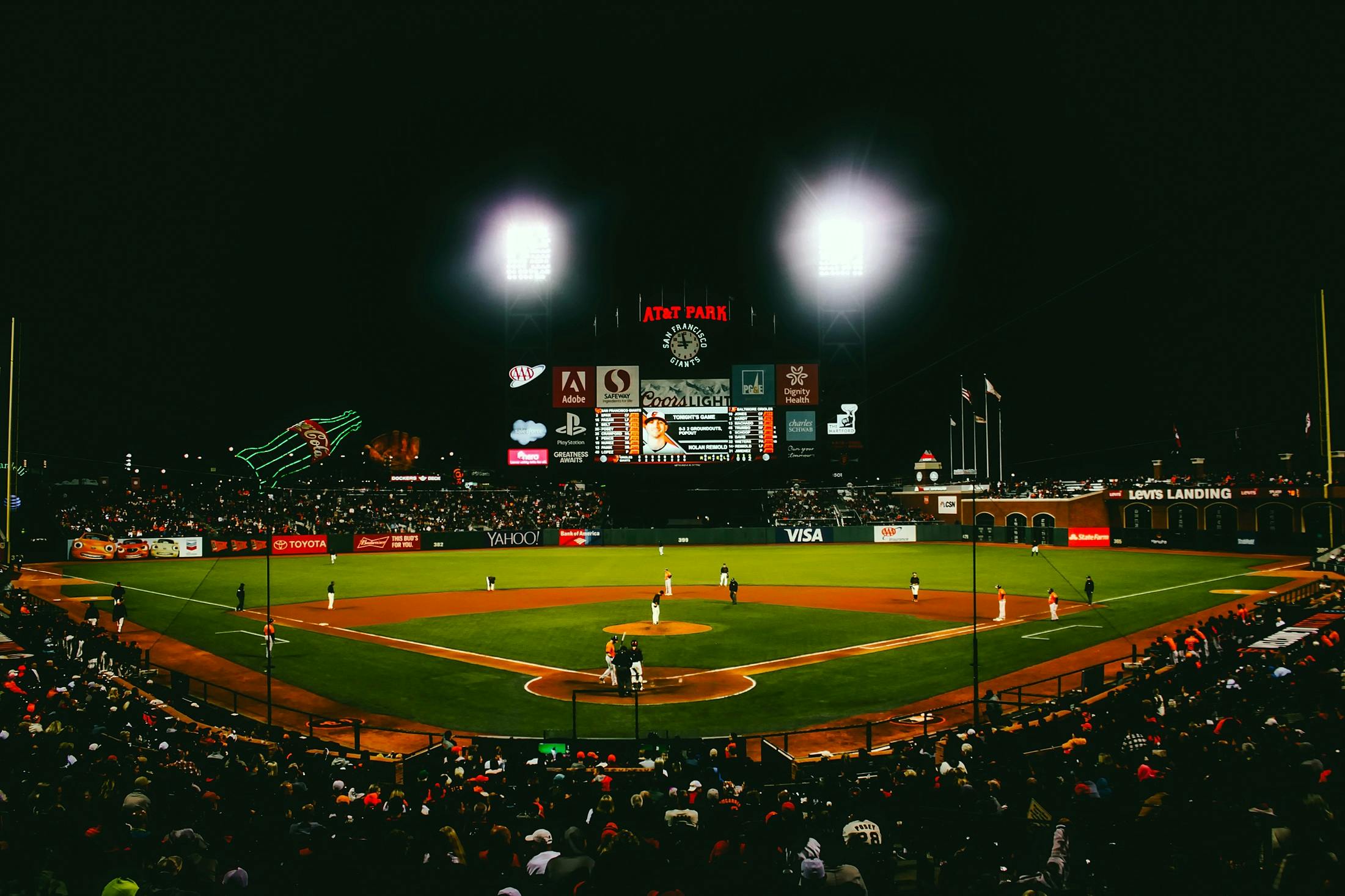
Giants fans packed Oracle Park for Opening Night and watched something get hijacked. Not the game. The broadcast.
Netflix aired its first major MLB showcase Tuesday night, a Yankees-Giants matchup at the park on King Street, and what should have been a showcase for San Francisco’s team on national television turned into a showcase for everything wrong with Silicon Valley’s approach to sports. According to an investigation by the Baseball.FYI newsletter, the broadcast missed the first Automatic Ball-Strike challenge of the night, buried fans under celebrity segments, and delivered a scorebug so small and illegible it might as well have not existed.
For the 40,000-plus fans who weren’t at the park and tried to follow along from home, the experience was worse than watching a scrambly cable feed from 1987. Locals who’ve spent decades learning to read the marine layer hanging over McCovey Cove got cameras that couldn’t figure out the same fog, delivering murky, washed-out visuals during key moments. This is Oracle Park. The marine layer is part of the deal. Any broadcast crew serious about covering baseball in San Francisco has exactly one job when it comes to those cameras: prepare for the fog.
Netflix didn’t prepare.
The streamer brought in comedian Bert Kreischer and former NFL quarterback Jameis Winston, who apparently spent airtime discussing WWE. On Opening Night. At a ballpark. For a baseball broadcast.
This is the tech industry’s recurring failure dressed up in a new uniform. Netflix has spent years perfecting the algorithm, the interface, the recommendation engine. What it has not done is build institutional knowledge about how to cover a sport. Baseball broadcasting has a grammar, a pace, a set of production standards that took generations to develop. You can’t buy that with a streaming rights deal. You can acquire the rights to the game without acquiring the ability to explain it.
The Giants front office worked hard to reshape this team as a draw. San Francisco has watched this organization spend real money, generate real buzz, and enter 2026 with genuine expectations. For that team’s home opener to be filtered through a production that missed a rules challenge and handed the microphone to Jameis Winston talking about wrestling is an insult to the fanbase that showed up and the one watching at home.
There’s a business story underneath the spectacle, too. Netflix paid significantly for these MLB rights, part of a broader push by the league to reach streaming audiences that have abandoned linear television. Commissioner Rob Manfred has made modernizing baseball’s media presence a stated priority. Tuesday night was a test of whether that modernization means better baseball or just different packaging.
Based on what Giants fans experienced, it was different packaging with worse contents.
The irony is sharp given the geography. Netflix is headquartered 35 miles north of Oracle Park, up the 101 in Los Gatos. The company is as Bay Area as it gets in terms of corporate identity. And it put on a broadcast that felt completely disconnected from what Bay Area baseball fans actually want, which is a clean feed, visible score, audible crowd, and commentary that respects the game being played.
The ABS challenge system is new. Fans are still learning it. Missing the first challenge of the broadcast on a night when the whole country was watching wasn’t a minor technical hiccup. It was a failure at the one moment when education mattered most.
MLB has handed Netflix prominent games to air throughout this season. That means more nights like Tuesday are possible, and Giants fans with home games in that package will be watching through the same fog-confused cameras and celebrity-stuffed commercial breaks.
The league and the streamer need to answer a straightforward question before the next broadcast: who is this actually for? Because Tuesday night at Oracle Park, it didn’t feel like it was for the fans who drove across the Bay Bridge, paid for parking, and went home to rewatch highlights because the live broadcast made it impossible to follow the game they love.